Define what a finished space looks like
Before opening the first storage box, write down the outcome you want. Perhaps the car needs to fit in the garage, a spare room needs to be usable again, or a storage unit needs to be empty. A concrete finish line helps you decide what belongs in the space and stops a small cleanup from becoming an endless sorting project.
Choose a manageable area for the first pass. Finish one shelf, wall or room before starting another. If several people share the belongings, agree on who can make decisions and which items need a separate conversation. A removal appointment works much better after those questions have been settled.
Set up four clearly marked groups
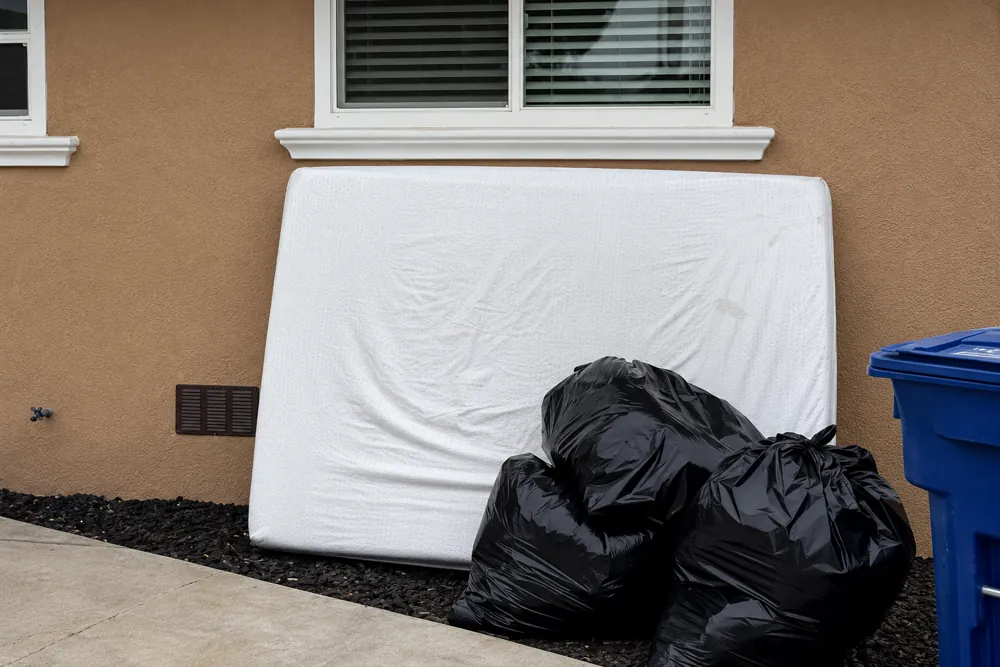
Use labels that everyone involved can understand: keep, donation candidate, remove and undecided. Place the keep group away from the route that will be used for loading. Bright tape or a sign on a doorway can help distinguish a room that is off limits from one that is part of the job.
Give the undecided group a deadline and an owner. It should hold a few genuine questions, rather than absorbing every difficult decision. A photograph can help a family member review an item remotely, but do not treat silence as permission to discard something. Confirm the decision before it reaches the removal group.
- Keep: identify where the item will live after the cleanout.
- Donation candidate: check condition and ask a recipient before arranging transport.
- Remove: describe the item and confirm acceptance with the hauling team.
- Undecided: assign a person and a decision date.
Make donation a confirmed destination
A usable item is worth checking for a second home, but a donation label is not an acceptance decision. Send the receiving organization clear photos and describe dimensions, condition and missing parts. Ask about current demand, drop-off arrangements and any collection service before you move the item.
Habitat for Humanity’s official directory lists ReStores serving Modesto and Merced and directs donors to contact the local store. It is a useful independent resource for exploring suitable furniture, appliances and home materials. Acceptance remains with the organization. Affordable Transfer does not claim a donation partnership or promise that a particular item will be accepted.
Protect the small things that are hard to replace
Set aside identification documents, keys, photographs, jewelry, medications and personal records before the larger sorting begins. Check drawers, jacket pockets, tool cases and the space inside furniture. Keep this review separate from the loading day so nobody has to make rushed decisions while other work is happening.
For computers and other devices, make your own backup and data-removal arrangements before parting with them. General haul-away is not a promise of secure data destruction. Put devices needing further attention in the keep area, and use an appropriate specialist if you need documented handling of sensitive information.
Identify materials that need a separate conversation
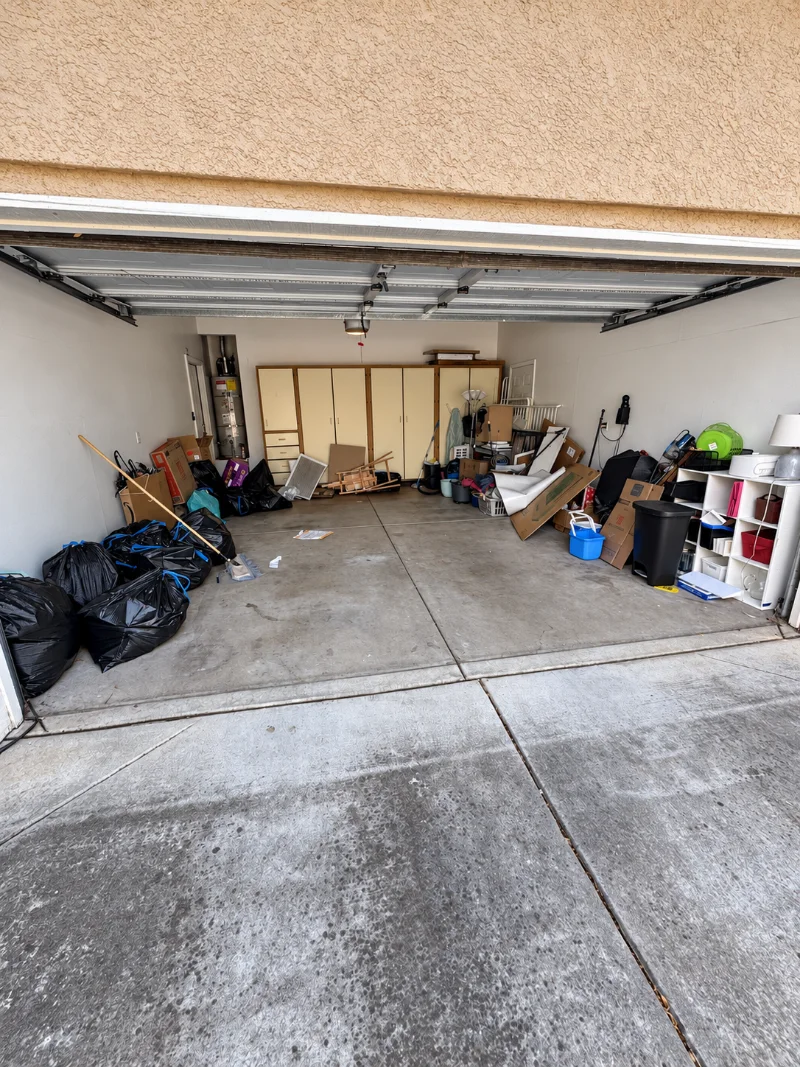
A garage can contain furniture, garden supplies, paint and old electronics in the same corner. Do not combine unidentified containers or liquids with ordinary household items just to make one pile. Photograph labels where they can be read safely and ask about the correct destination before moving them.
Stanislaus County maintains a household hazardous-waste program with its own accepted-material and access rules. CalRecycle also provides household hazardous-waste guidance. Use those resources when you are unsure about chemicals or other special material. A general cleanout quote does not establish that every item on the property can travel in the same load.
Prepare access without doing the heavy lifting yourself
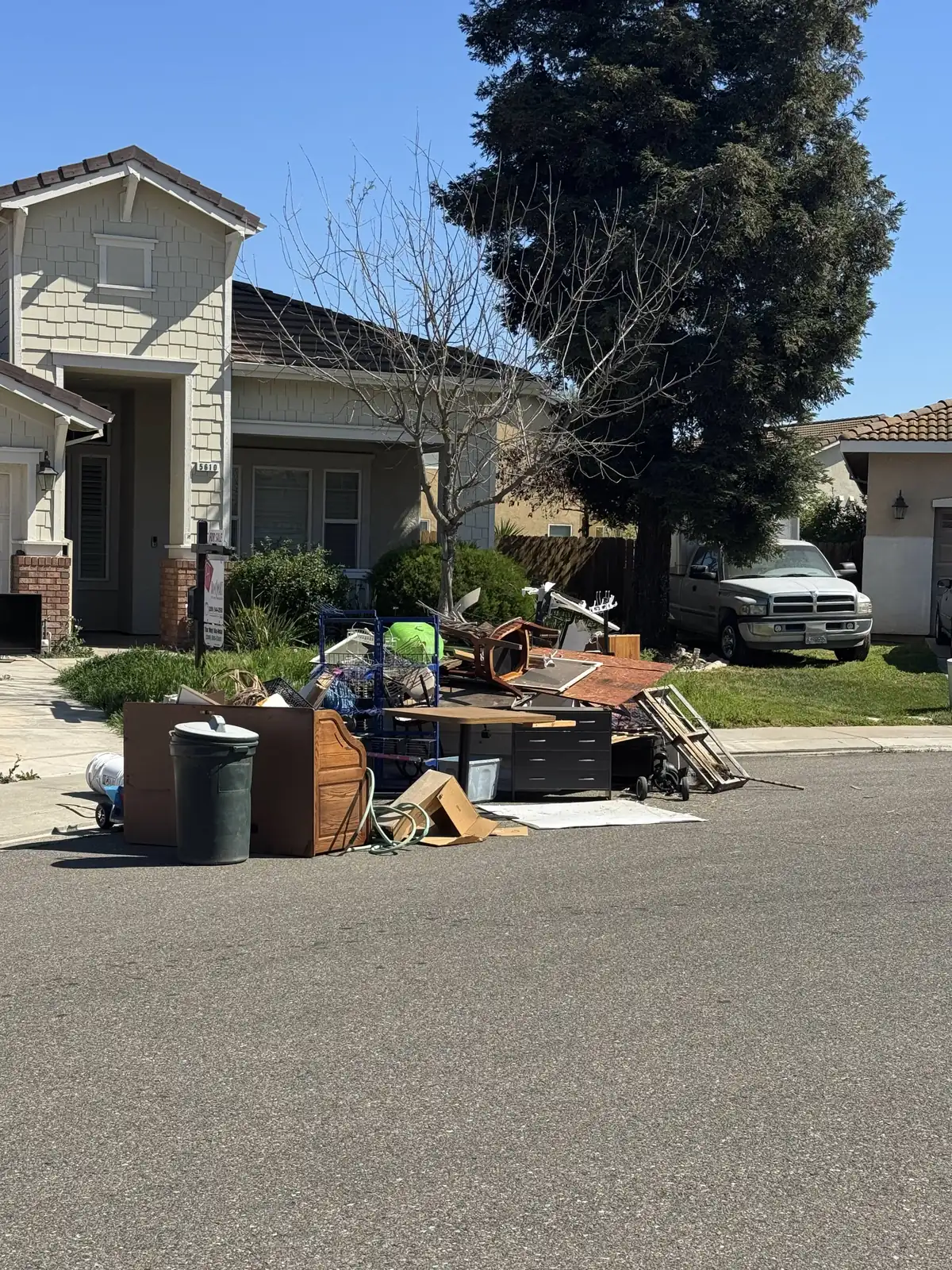
Tell the team where the removal items are, rather than assuming everything must be dragged to the curb. Describe stairs, narrow turns, gates, parking and the distance from the room to a loading area. Keep the route clear of loose objects and identify anything attached to a wall, floor or utility connection.
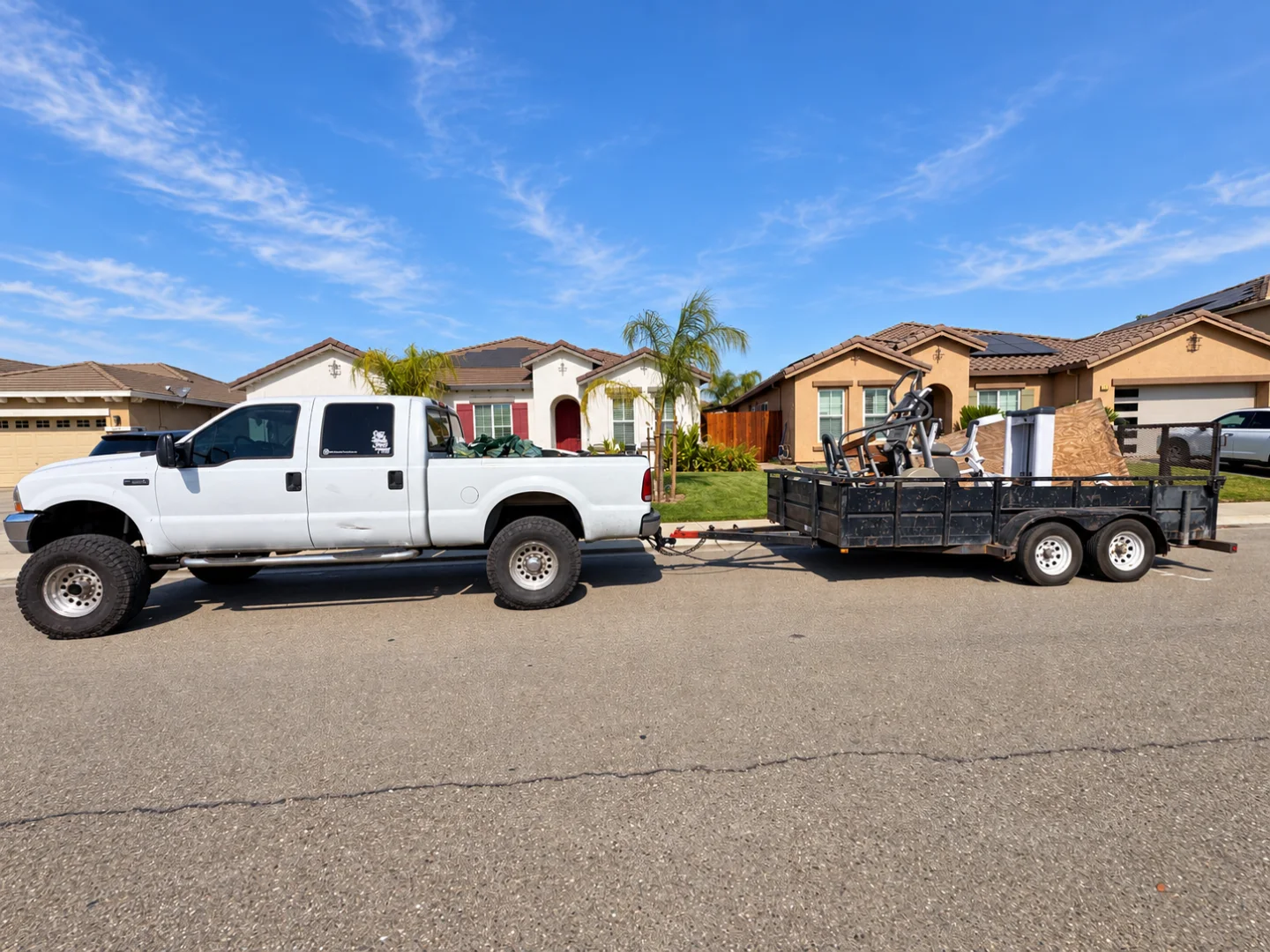
For the final walkthrough, use the same labels and item list you prepared earlier. Point out what stays as carefully as what goes. If you discover another area that needs clearing, ask for the scope and price to be reviewed before adding it. Affordable Transfer can discuss the accepted items, access and timing at (209) 353-2514 or through the quote request form.